

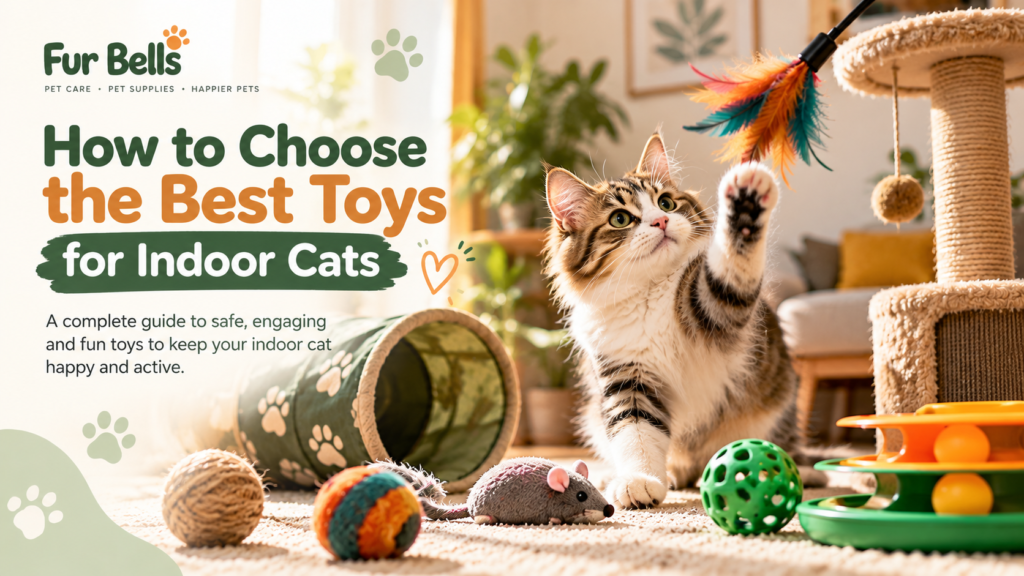
Cats love to explore, chase, pounce, and play. Even indoor cats need opportunities to express their natural hunting instincts and stay physically and mentally active. The right toys can make playtime more enjoyable while helping your feline companion stay engaged at home.
However, with so many cat toys available, choosing the right ones can feel overwhelming. From interactive toys and teaser wands to puzzle feeders and scratching posts, each type offers different benefits.
In this guide, we’ll explore how to choose the best toys for indoor cats and make playtime safer, more stimulating, and more enjoyable.
1. Understand Your Cat’s Play Style
Every cat has its own personality and preferences. Some enjoy chasing moving objects, while others prefer batting small toys or exploring hidden treats.
Before buying several toys, observe how your cat naturally plays.
- Chasers: May enjoy balls and toys that move across the floor.
- Pouncers: Often enjoy toys they can jump toward or grab.
- Explorers: May prefer tunnels, boxes, and interactive toys.
- Food-motivated cats: May enjoy puzzle feeders that encourage them to work for treats.
Your cat’s preferences can change over time, so offer different types of play and see what captures its interest.
Buying tip: Start with two or three different toy styles instead of purchasing a large collection immediately.
2. Choose Interactive Cat Toys
Interactive toys encourage cats to chase, stalk, and pounce. Wand toys with feathers or fabric attachments can help recreate the movements of prey and encourage active play.
Move the toy in short bursts, allowing your cat to watch, chase, and catch it. Give your cat opportunities to succeed rather than moving the toy continuously out of reach.
Always supervise play with wand toys and store them safely afterward, particularly if they have strings or small attachments.
Buying tip: Look for securely attached components and toys that are appropriate for your cat’s size and play habits.
3. Try Balls and Chase Toys
Balls and lightweight chase toys can encourage cats to move around the house. Some cats enjoy batting a ball across the floor, chasing it down a hallway, or carrying a favourite toy from room to room.
Choose toys that are large enough not to be swallowed and made from materials suitable for cats.
Avoid toys with loose parts that can easily break off, as these may present choking or ingestion risks.
Buying tip: Choose lightweight toys that move easily across your floor and are simple to inspect for damage.
4. Explore Puzzle Feeders and Treat Toys
Puzzle feeders encourage cats to use their problem-solving skills to access food or treats. They can add variety to mealtimes and provide an engaging activity for cats that enjoy exploring.
Start with an easy puzzle and gradually introduce more challenging options as your cat learns how it works.
Use an appropriate portion of your cat’s daily food allowance when possible, and clean the feeder regularly according to its instructions.
Buying tip: Choose a puzzle feeder that is stable, easy to clean, and suitable for your cat’s experience level.
5. Consider Cat Tunnels and Hideaways
Cats often enjoy exploring enclosed spaces, hiding, and suddenly emerging during play. Tunnels and hideaways can provide opportunities for exploration and interactive games.
A tunnel can also be used with balls or supervised teaser toys to make playtime more interesting.
Choose products with stable construction and no exposed wires, loose parts, or openings where your cat could become trapped.
Buying tip: Look for a tunnel that folds away easily if you have limited living space.
6. Don’t Forget Scratching Posts
Scratching is a normal feline behaviour. Cats scratch to maintain their claws, stretch their bodies, and mark their environment.
A suitable scratching post gives your cat an appropriate place to scratch instead of relying on furniture or carpets.
Scratching products come in different materials and designs, including cardboard scratchers, sisal posts, and horizontal scratching boards.
Choose a stable post that allows your cat to stretch comfortably. Some cats prefer vertical surfaces, while others prefer horizontal ones.
Buying tip: Observe where and how your cat likes to scratch before choosing a post or board.
7. Prioritise Toy Safety
A fun toy should also be safe for your cat. Before purchasing, check the materials, construction, size, and any small attachments.
Follow these basic safety practices:
- Avoid toys with loose strings, ribbons, or small parts that can be swallowed.
- Supervise your cat when using toys that have feathers, cords, or detachable pieces.
- Inspect toys regularly for damage.
- Remove broken toys promptly.
- Store interactive toys securely after supervised play.
- Follow the manufacturer’s cleaning and care instructions.
No toy is completely indestructible. If your cat tends to chew or swallow non-food objects, ask your veterinarian for guidance about appropriate toys.
8. Rotate Toys to Keep Playtime Interesting
Cats may lose interest when the same toys are available every day. Rotating toys can introduce variety without requiring you to buy new products constantly.
Keep a small selection available and put the others away for a while. Then swap them periodically to create a fresh experience.
You can also vary the way you play. Try short chasing sessions, hide a favourite toy behind a cushion, or introduce a puzzle feeder.
Buying tip: Keep your cat’s favourite toys in the rotation and pay attention to which activities encourage the most engagement.
9. Match Toys to Your Cat’s Age and Abilities
A kitten, an active adult cat, and a senior cat may have different play needs.
Kittens: Often enjoy short, frequent play sessions with lightweight toys designed for their size. Supervision is important because kittens may chew or swallow small objects.
Adult cats: May enjoy a mixture of chasing games, puzzle feeders, tunnels, and scratching products.
Senior cats: May prefer gentler activities and toys that don’t require high jumps or strenuous movement. Adjust play to your cat’s mobility and comfort.
If your cat suddenly becomes less interested in play or shows signs of discomfort, consult a veterinarian rather than assuming the change is simply due to age.
10. Create a Fun Indoor Play Routine
You don’t need an elaborate setup to make indoor life more engaging for your cat. A few carefully selected toys and regular interaction can make a difference.
Try these simple ideas:
- Schedule short play sessions throughout the day.
- Use a teaser wand during supervised play.
- Provide scratching surfaces in suitable locations.
- Introduce puzzle feeders when appropriate.
- Offer safe hiding places and opportunities to explore.
- Rotate toys to maintain variety.
Allow your cat to rest whenever it needs to, and adapt the routine to its individual preferences.
How to Choose the Right Cat Toys on a Budget
You don’t need to spend a lot to provide enriching play opportunities. Focus on toys your cat actually uses instead of buying products simply because they look appealing.
Consider these factors before making a purchase:
Safety: Avoid small detachable parts and materials that could be swallowed.
Durability: Look for sturdy construction and inspect toys regularly for damage.
Engagement: Choose toys that match your cat’s preferred way of playing.
Ease of cleaning: Select products that can be maintained according to the manufacturer’s instructions.
Value: A few well-chosen toys may be more useful than a large collection your cat ignores.
Final Thoughts
Choosing the best toys for indoor cats means understanding your cat’s personality, play style, age, and abilities. Interactive toys, balls, puzzle feeders, tunnels, and scratching posts can all contribute to a more stimulating home environment when selected and used appropriately.
Start with a small variety, supervise play when needed, and rotate toys to keep things interesting. Most importantly, spend time playing with your cat and observe what it enjoys.
At Fur Bells, we believe that thoughtful pet supplies and everyday care can help create happier pets and happier homes.